New Forest Takes Root on Mount Shasta
Crews have planted more than 1.47 million seedlings across the Lava Fire footprint as the Shasta-Trinity National Forest works to restore burned land.

MOUNT SHASTA, Calif. — Nearly five years after the Lava Fire burned across the northern slopes of Mount Shasta, more than 1.47 million new seedlings are now taking root across the fire footprint.
The Shasta-Trinity National Forest said crews have planted across 2,769 acres of burned land since 2024, part of a long-term effort to restore forest conditions after the 2021 wildfire.
The Lava Fire ignited in June 2021 and burned about 25,000 acres. In parts of the burn area, the fire left large stretches without enough surviving trees to naturally regenerate, creating a need for active reforestation work.

Forest Service seed banks helped support the recovery effort, with planners developing a strategy to accelerate regrowth, stabilize the landscape and restore healthy forest conditions for the future.
The work has taken place over three planting seasons, with crews of 10 to 15 people working at a time across the burned landscape.
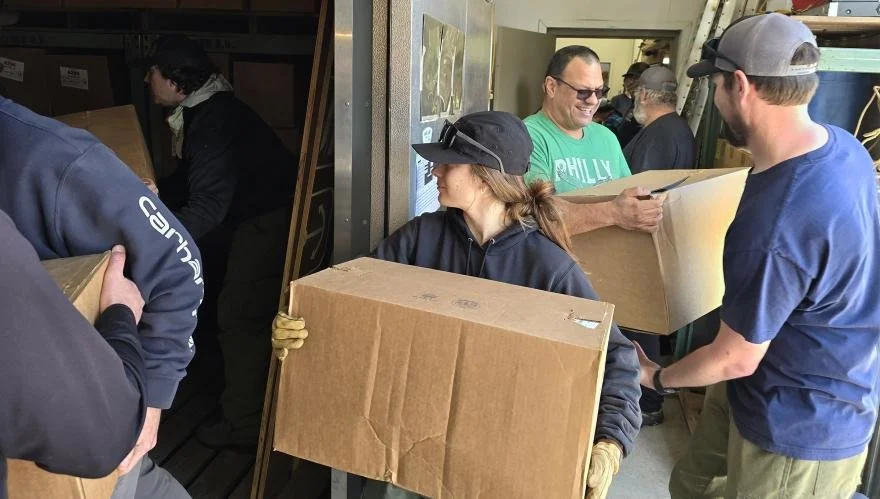
Many hands make light work as this crew conveys boxes of seedlings into the cooler on the Shasta-Trinity National Forest. Every step of reforestation relies on dedicated crew from the Forest Service and its partners. (Forest Service photo by Lily Martindale)
According to the Forest Service, the seedlings planted in the Lava Fire footprint include ponderosa pine and Jeffrey pine. The young trees are stored in large cooler spaces before planting, with the agency noting that one million seedlings alone would fill a 53-foot semitruck.
“Both pine species were selected for their adaptability to the site and ability to thrive in the Mount Shasta, Weed and Lake Shastina area,” said Lily Martindale, reforestation program manager for the Shasta-Trinity National Forest.
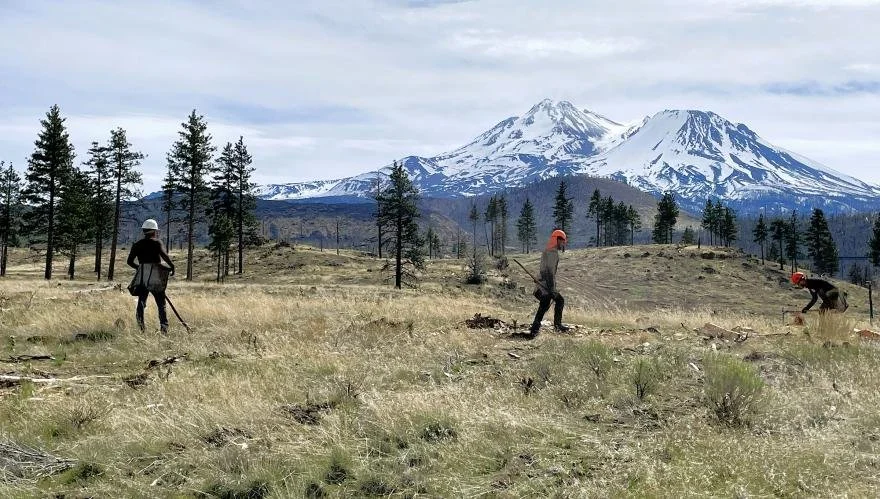
Planting crews, planting hoes in hand, chip at the soil to plant seedlings on the Lava Fire Reforestation Project, April 2026. Planting hoes are capable of scalping and producing the planting hole. A snow-capped Mount Shasta provides the beauty for this work on the north side of Mount Shasta and Shastina, Northern California. (Forest Service photo by Jason Klotz)
Before planting began, crews prepared the site by removing dead and dying fire-damaged trees. Salvage logging helped reduce hazards and recover value from damaged timber. Afterward, large masticators reduced regrown brush and small dead trees to improve planting conditions and increase seedling survival rates.
Crews from small-business partners Gonzalez Forestry, Imperial Forestry and Absolute Forestry worked with Forest Service staff on the reforestation project.
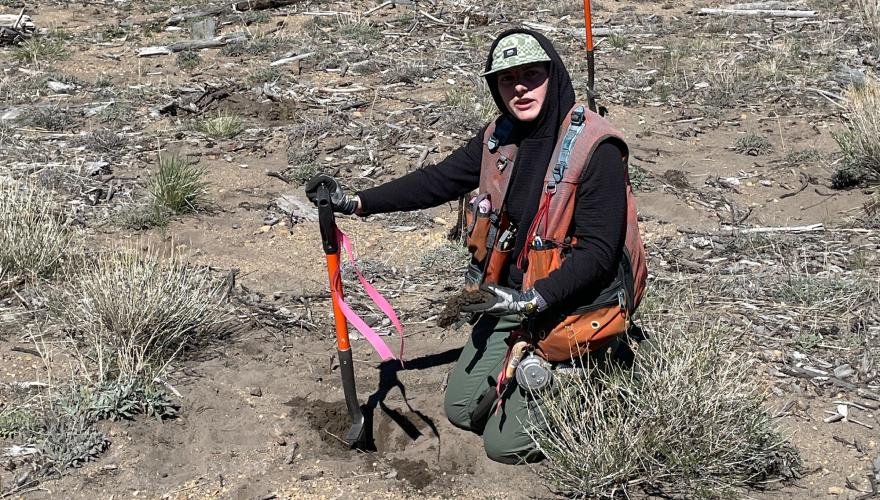
This Forest Service worker readies a seedling for its final plop and pat, to secure the tree in the soil and protect it against heavy winds and weather. (Forest Service photo by Lily Martindale)
Forest Service silviculturists, specialists who help guide the establishment and care of healthy forests, helped direct the large-scale planting work. Their role included making sure seedlings were placed in locations with the best chance for long-term success.
The Forest Service said each seedling had already been growing for one to two years before being planted in the forest. Many were about a foot tall by the time they were placed in the ground.
Reforestation projects like the Lava Fire recovery effort support several long-term goals, according to the agency. As fire-damaged trees are removed and processed at sawmills, new trees are expected to help provide wildlife habitat, improve watersheds and store carbon over time.
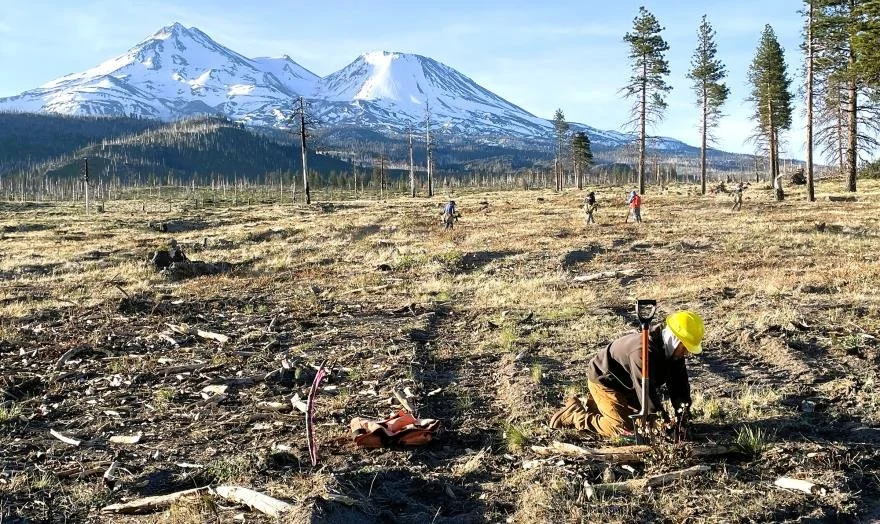
A Forest Service inspector checks the quality of planted seedlings, to ensure the best survival rates for future healthy forests. (Forest Service photo by Jason Klotz)
The changing landscape also affects visitors who explore the lower- and mid-elevation slopes of Mount Shasta. The Forest Service said the area receives more than 26,000 annual visitors from outside the region and around the world.
The project reflects a broader commitment to active land stewardship and postfire recovery on national forest lands. Across California and the West, national forests are increasingly balancing wildfire response with the long-term work of restoring landscapes after major fires.
“This work is about more than planting trees,” Martindale said. “It’s about restoring a resilient forest that can better withstand future wildfire, insects, drought and changing conditions.”
Source: Shasta-Trinity National Forest
Cover image: A well-planted seedling takes root on the Mount Shasta landscape, as part of the Lava Fire Restoration Project in Northern California, April 2026. In just over three planting seasons, Forest Service crews and partners have planted 1.47 million seeds across 2,769 acres of burned landscape. (Forest Service photo by Lily Martindale)



Recent Outdoors