Oregon Paddle Permit Now in Effect Statewide, Draws Pushback
A 2025 law now requires Waterway Access Permits for all nonmotorized boats, while opponents seek to repeal the expansion through a 2026 ballot petition.

Oregon’s Waterway Access Permit now applies statewide to all nonmotorized boats, including kayaks, canoes, rafts, drift boats, stand-up paddleboards and inflatable versions regardless of length.
Permits help fund public waterway access improvements and aquatic invasive species prevention, but opponents argue the expansion unfairly charges low-risk paddlers.
Adults using affected watercraft must carry a valid permit or face a $115 fine.
OREGON — A new Oregon boating rule is changing what paddlers need before heading onto the water this year.
Under a 2025 law passed by the Oregon Legislature, operators of all nonmotorized boats now need a Waterway Access Permit while using Oregon waterways. The expanded requirement includes kayaks, canoes, rafts, drift boats, stand-up paddleboards and inflatable versions regardless of length.
Previously, the permit applied to nonmotorized boats 10 feet and longer. The 2026 expansion brings smaller paddlecraft into the same permit system.

The Oregon State Marine Board says the permit is not a boat registration. Nonmotorized boats do not need to be titled or registered, and the Waterway Access Permit is transferable between nonmotorized craft. The permit is required one per boat when the boat is in use.
Youth 13 and younger do not need a permit.
Permit options through the Marine Board include a seven-day permit for $6, a one-year permit for $20 and a two-year permit for $35, with an additional online portal fee. Permits are also available through ODFW’s licensing system, where prices include a $2 transaction fee.
Boaters must be able to show the permit to marine law enforcement, either digitally or as a printed copy. Failure to show a required permit is a Class D violation with a $115 fine, according to the Marine Board.
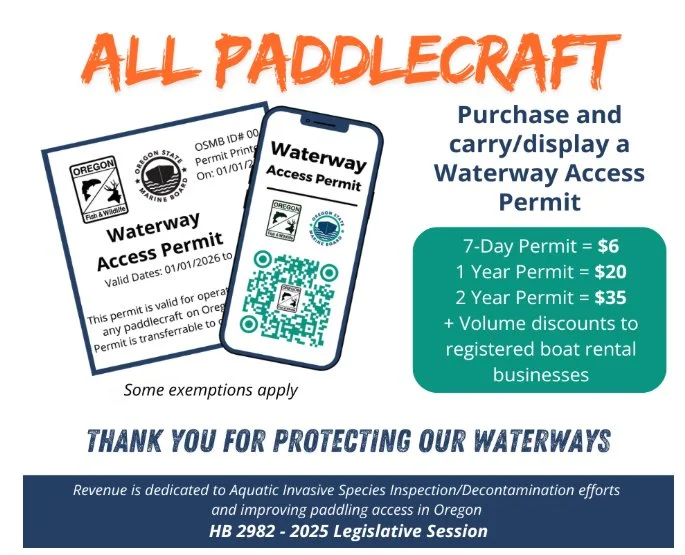
State officials say the money supports two main programs: improving public waterway access and helping prevent the spread of aquatic invasive species.
ODFW says permit revenue helps fund access improvements such as boat ramps, docks, restrooms, parking areas and launch facilities for paddlers and small boats. A portion also supports aquatic invasive species inspection stations, education and rapid response work aimed at keeping species such as zebra and quagga mussels out of Oregon waters.
Aquatic invasive species can create major ecological and infrastructure problems once established. ODFW says they can clog intake pipes for power plants, water systems and irrigation infrastructure, damage boat motors, disrupt food webs and harm fisheries.
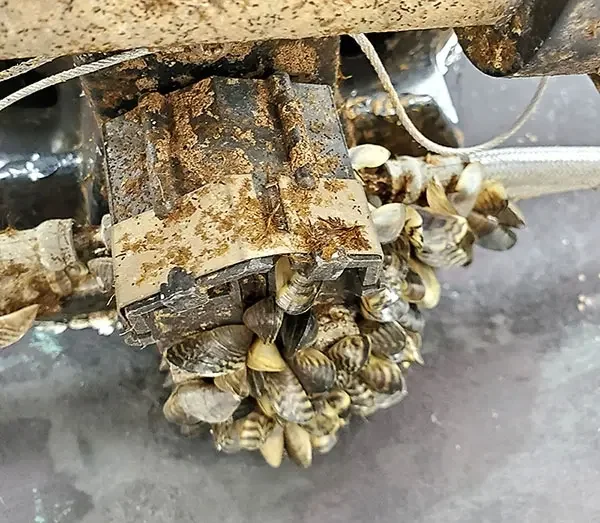
Zebra mussels found on a trailered boat entering Oregon. (ODFW)
The threat has moved closer to Oregon in recent years. Quagga mussels were found in the Snake River at Twin Falls, Idaho, in 2023, prompting a rapid response in Idaho. Golden mussels were also discovered in California’s Sacramento-San Joaquin Delta in 2024.
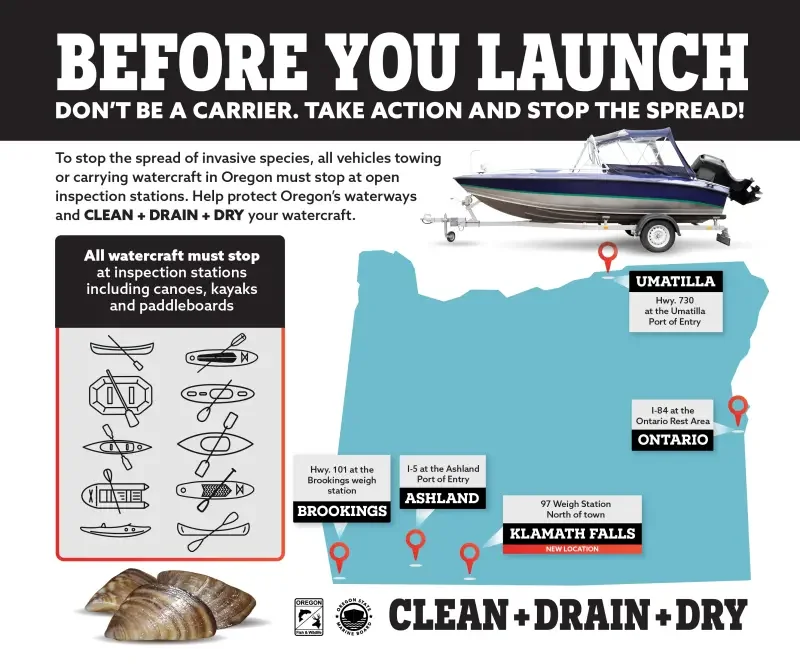
ODFW reminds travelers that even if they are only passing through Oregon with a watercraft and do not launch it, they are still required to stop at any open watercraft inspection station along their route.
The permit expansion has also drawn organized opposition.
Let Us Paddle, a grassroots political action committee, is seeking to repeal the updated law. The group argues that human-powered paddlecraft such as kayaks, canoes and stand-up paddleboards are not the primary risk for spreading invasive species and should not be charged in the same broad system.
Opponents say the state should focus more directly on higher-risk boats, especially trailered and out-of-state watercraft that can carry standing water in motors, live wells, bilges or ballast systems. Let Us Paddle has argued that the expanded permit places a new cost on families, casual paddlers and low-impact recreation users who are not the main source of the problem.
In a recent KPTV report, Let Us Paddle representative Ben Roche said the group supports inspection efforts but opposes charging recreational paddlers for a program opponents believe is more closely tied to motorized and trailered boats entering the state.

The repeal effort is tied to Initiative Petition 2026-053, which has received a certified ballot title from the Oregon Secretary of State. The caption says the measure would repeal Oregon’s law requiring waterway access permits to operate certain nonmotorized boats and sailboats.
KPTV reported that Let Us Paddle had collected at least 20,000 signatures and was seeking enough additional signatures to qualify the measure for the November 2026 ballot.
American Whitewater, a national river advocacy organization, also opposed HB 2982 during the legislative process and said the bill moved quickly with limited public input. The organization helped secure an exemption for certain small nonmotorized boats under 10 feet used for whitewater recreation on designated waters.
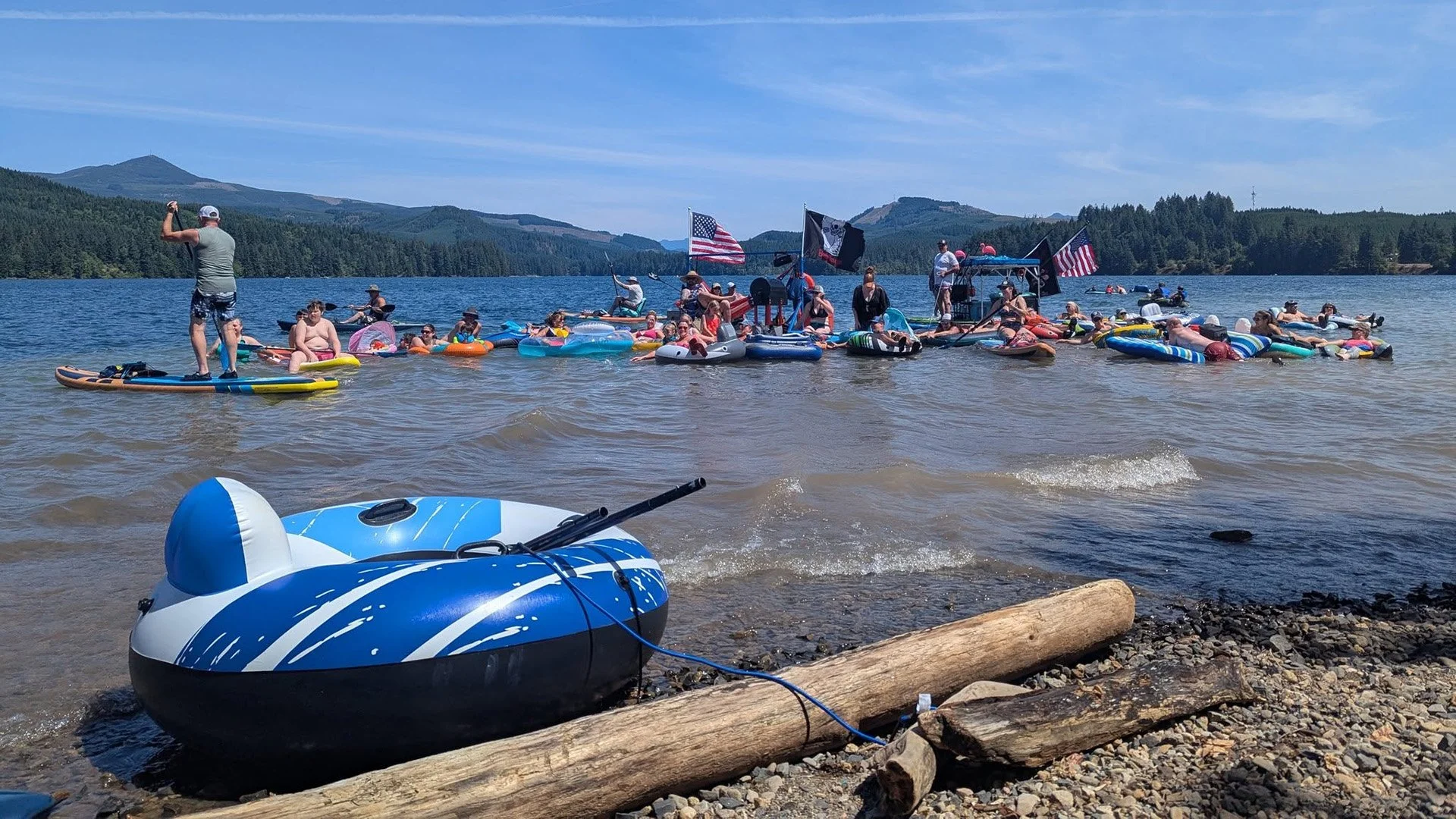
Paddlers and small-watercraft users gather on an Oregon waterway in an image shared by Let Us Paddle, a grassroots political action committee opposing Oregon’s expanded Waterway Access Permit requirement for nonmotorized boats. Photo courtesy of Let Us Paddle.
At the same time, American Whitewater has noted that Waterway Access Permit funds have supported some river access projects used by paddlers. That reflects the central tension in the debate: how Oregon should pay for waterway access, conservation and invasive species prevention without discouraging low-impact outdoor recreation.
For paddlers, the practical takeaway is straightforward: most adults using a kayak, canoe, raft, paddleboard, drift boat or similar nonmotorized craft on Oregon waters now need to carry a Waterway Access Permit.
For policymakers and voters, the larger question remains unsettled: whether the expanded permit system is a fair way to fund shared waterway protection, or whether Oregon has placed too much of that burden on the people using the smallest boats.
Cover image: A paddler crosses Sparks Lake in Central Oregon near sunset. Oregon’s expanded Waterway Access Permit now applies to all nonmotorized boats, including kayaks, canoes, rafts and stand-up paddleboards regardless of length. Photo by Brian Gailey Photography, 2016.


Recent Outdoors