Upper Klamath Refuge Under Recreational Health Advisory
Oregon Health Authority says visitors should avoid swimming and high-speed water activities where cyanobacteria blooms are present.
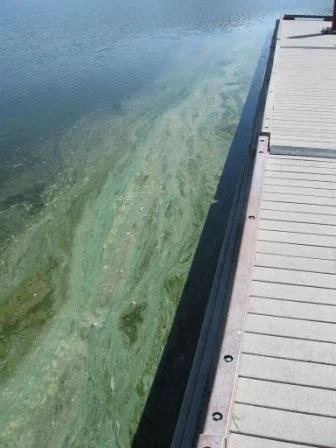
A cyanobacteria bloom is shown near a dock in this Oregon Health Authority file photo. Health officials warn that exposure can occur by swallowing affected water or inhaling water spray where blooms are present. Photo courtesy of Oregon Health Authority.
KLAMATH COUNTY, Ore. — Oregon Health Authority has issued a recreational use health advisory for Upper Klamath National Wildlife Refuge after cyanotoxins were detected above recreational use values.
The advisory, issued Wednesday, May 28, applies to areas of the refuge where cyanobacteria blooms are present. OHA says people should avoid swimming and high-speed water activities, including water skiing and power boating, in affected areas because exposure can occur through swallowing water or inhaling water spray.

Oregon Health Authority’s harmful algae bloom advisory page lists Upper Klamath National Wildlife Refuge under an active recreational use advisory dated May 28, 2026, with microcystin detected at 8.27 ug/L. Screenshot from Oregon Health Authority.
Toxins are not absorbed through the skin, according to OHA, though people with skin sensitivities may develop a puffy red rash after contact.
OHA says visitors can still enjoy Upper Klamath National Wildlife Refuge for activities such as fishing, bird watching and canoeing. Boating is considered safe as long as speeds do not create excessive water spray, which could increase the risk of inhaling cyanotoxins.

Drinking water directly from areas affected by a bloom is especially dangerous. OHA says cyanotoxins cannot be removed by boiling, filtering or treating water with camping-style filters.
People using nearby campgrounds or day-use areas are encouraged to contact campground management or the local health department with questions about available drinking water. OHA also advises anyone who draws in-home water directly from an affected area, and does not use a well or public water system, to use an alternative source for drinking and cooking.
Children and pets are at higher risk because of their size, activity level and likelihood of accidentally ingesting water.
For people, exposure to cyanotoxins can cause symptoms similar to food poisoning, including stomach cramps, diarrhea, nausea and vomiting. More serious symptoms can include numbness, tingling, dizziness and shortness of breath, which may require medical attention.
Dogs can become extremely ill or die within minutes to hours after exposure by drinking affected water, licking contaminated fur, or eating floating mats or dried crusts along the shore. Symptoms in dogs may include difficulty walking, seizures, lethargy and loss of appetite. OHA recommends keeping dogs on leashes and away from affected water and shoreline material.
OHA also recommends not eating fish caught from areas where cyanobacteria blooms are present because of unknown health risks. Anyone who chooses to eat fish from those areas should remove the fat, skin and organs before cooking or freezing, and rinse fillets with clean water.
For health information or to report an illness, contact Oregon Health Authority at 971-673-0482 or visit OHA’s cyanobacteria harmful algae bloom information page.
Cover image: A cyanobacteria bloom is shown along a shoreline in this Oregon Health Authority file photo. OHA has issued a recreational use health advisory for Upper Klamath National Wildlife Refuge in Klamath County. Photo courtesy of Oregon Health Authority.