
How to Help
Support wildfire response, evacuees, and affected communities
When wildfires impact our region, many people want to help. That generosity matters, but during an active emergency, the best help is organized, verified, and directed where it is actually needed.
Before donating supplies, delivering food, or traveling to an affected area, check with official agencies, evacuation shelters, local emergency management, or verified relief organizations.
Helping Firefighters
Fire camps generally cannot accept food, homemade items, or unrequested donations because of health, safety, logistics, and federal contract requirements. Fire crews are supported through established incident systems with meals, supplies, and other resources.
Better ways to support firefighters include:
Display thank-you signs or banners
Send thank-you notes to local fire agencies
Donate to the Wildland Firefighter Foundation or verified firefighter support groups
Support your local fire department or emergency services organization
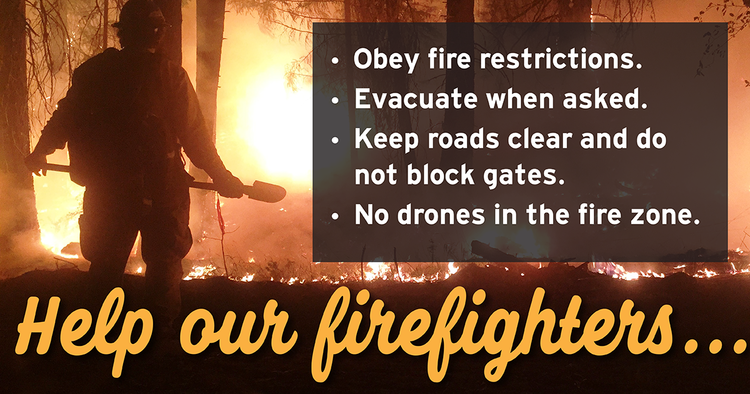
Follow fire restrictions and help prevent new starts
Create defensible space around your home or property
One of the best ways to help firefighters is to reduce risk before a fire starts.
Helping Evacuees
Evacuees may need food, water, hygiene products, clothing, medications, pet supplies, transportation, or temporary lodging. Needs change quickly, so contact the evacuation shelter, local emergency management office, Red Cross, food bank, or verified relief group before dropping off supplies.
Helpful ways to support evacuees include:
Donate money to verified relief organizations
Donate requested supplies to official collection sites
Support local food banks
Help with pet and livestock needs when requested
Share only verified emergency information
Check on neighbors who may need help preparing or evacuating
Cash donations are often the most flexible and useful form of support because relief organizations can purchase exactly what is needed.
Helping Animals and Livestock
Wildfires often affect pets, horses, livestock, and other animals. Before donating feed, crates, bedding, hay, or supplies, check with the organization managing animal sheltering or livestock evacuation.
Ways to help may include donating requested pet supplies, supporting humane societies or animal rescue groups, and preparing your own animals with carriers, food, medication, ID tags, and evacuation plans.
What Not to Do
Good intentions can create problems during an emergency. Please avoid:
Driving into fire areas to look around
Blocking roads, evacuation routes, or emergency vehicles
Flying drones near wildfire areas
Dropping off unrequested food or supplies at fire camps
Sharing scanner rumors or outdated evacuation posts
Self-deploying as a volunteer unless officially requested
Calling 911 or dispatch for general fire information
During a wildfire, the best help often starts with staying informed, staying clear, and sharing verified information.
Stay Ready
Helping also means preparing before fire reaches your community.
Residents are encouraged to sign up for county emergency alerts, know evacuation routes, prepare a go-bag, keep important documents ready, plan for pets and livestock, maintain defensible space, and follow local fire restrictions.
Share Verified Relief Efforts
HWD Firewatch may share verified wildfire relief, evacuation support, animal sheltering, donation, and recovery information for Southern Oregon and Northern California.
If your organization is coordinating an approved wildfire relief effort, contact HiveWire Daily with the details, including what is needed, where donations or volunteers should go, and who the public should contact.
The best way to help is to stay informed, support verified needs, and keep yourself, your family, and your community prepared.
HWD Firewatch is a news and information resource and is not a replacement for official emergency alerts. Always follow instructions from your local sheriff’s office, emergency management agency, fire officials, and law enforcement.
Follow HWD Firewatch