Forest Service Says It Is Ready for 2026 Wildfire Season
The agency says more than 28,000 responders, hundreds of aircraft and expanded fuels reduction work are part of its national wildfire readiness plan.

WASHINGTON, D.C. — The U.S. Forest Service says it is prepared for the 2026 wildfire season with a national response system that includes more than 28,000 responders, hundreds of aircraft, interagency crews, engines, heavy equipment and large-scale logistics support.
In a “Ready for Wildfires” update, the agency said wildfires are becoming bigger, faster and more unpredictable as drought conditions and years of accumulated dry vegetation continue to raise risks for communities across the country.
The Forest Service said its wildfire mission is focused on keeping the public and firefighters safe, protecting communities and actively managing forests before and during fire season.
According to the agency, its 2026 readiness network includes more than 90 interagency hotshot crews, 40 Type 2 initial attack crews for rapid response, and more than 400 additional Type 2 crews prepared for extended fire operations.
The agency also said it has approximately 900 Forest Service fire engines, supported by more than 1,600 contracted engines and additional heavy equipment.
A U.S. Forest Service infographic outlines national firefighting resources, including hotshot crews, engines, aircraft, aviation assets and other wildfire response equipment. Image courtesy of the U.S. Forest Service.
In the air, the Forest Service said it manages more than 400 aircraft, including air tankers, helicopters and water-scooping aircraft. That includes 29 large and very large air tankers ready to respond nationwide.
The agency said those resources are available through a national coordination system designed to move crews, equipment and aircraft where they are needed, including across jurisdictions and not only on federal lands.

Forest Service officials said preparedness also depends on a national logistics system that gives fire managers access to more than 22,000 contracted resources from roughly 2,500 vendors. The agency said it administers all interagency logistical support contracts for wildland fire.
But the Forest Service said wildfire readiness is not limited to suppression after a fire starts.
Each year, the agency said it reduces hazardous fuels across 3 million to 4 million acres through work such as thinning, timber harvest and prescribed fire. The goal is to reduce wildfire intensity before flames threaten communities, homes, infrastructure, natural resources and cultural resources.
The agency also emphasized that most wildfires are human-caused, and many begin on private land. Forest Service officials said prevention, public education and collaboration with states, tribes, local governments, federal agencies and private landowners remain essential parts of wildfire readiness.
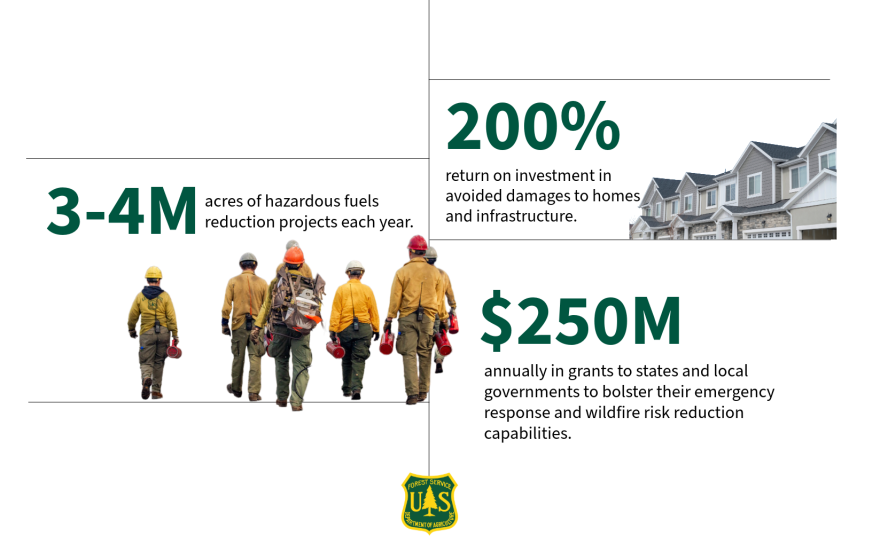
A U.S. Forest Service infographic highlights wildfire prevention and preparedness, including hazardous fuels reduction work, community protection and investments tied to wildfire readiness. Image courtesy of the U.S. Forest Service.
The agency said wildfire response is built around a shared national system, with partners training, planning and responding together when fires ignite.
In its preparedness materials, the Forest Service said firefighter and public safety remain the top priority. The agency said the public should expect aggressive, coordinated and unified fire response, explanations about tactics being used, and efforts to reduce bureaucratic delays during fire response.
“When a wildfire starts, the safety of firefighters and the public is always our first priority,” the agency said in its readiness materials.
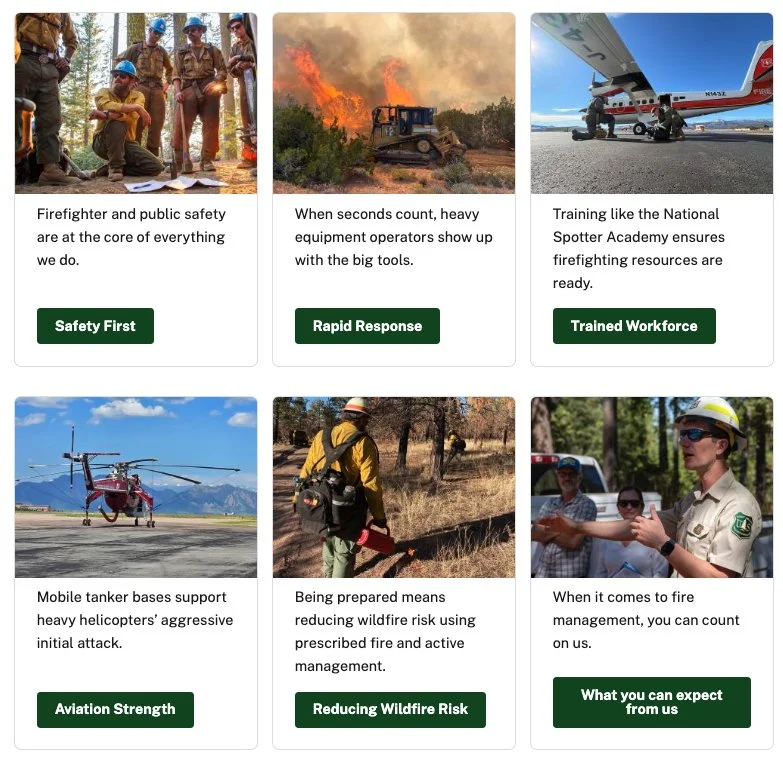
U.S. Forest Service preparedness materials highlight firefighter safety, rapid response, aviation, workforce training and wildfire risk reduction ahead of the 2026 fire season. Image courtesy of the U.S. Forest Service.
The Forest Service said it will respond quickly to every wildfire with the goal of reducing harm to people, homes, infrastructure and natural and cultural resources. When conditions allow, the agency said it will also use prescribed fire to help reduce future wildfire risk and improve forest health.
HWD Firewatch will continue tracking wildfire readiness, prevention, smoke, evacuation information and major fire activity affecting Oregon, Northern California and the broader western wildfire landscape during the 2026 fire season.
Source: U.S. Forest Service

Cover image: Hotshot crews head out to fight the Happy Camp Complex Fire in the Klamath National Forest in California on Sept. 17, 2014. The U.S. Forest Service says more than 90 hotshot crews are part of its national wildfire readiness system for the 2026 fire season. U.S. Forest Service photo by Kari Greer via USDA Flickr, CC BY 2.0.


More HWD Firewatch