Historian Unearths Story of Silent Film Shot in Klamath Basin 100 Years Ago
Former KCC student discovers local gem from golden age of silent movies
Some of Karen Caverly-Molineaux’s writings can be found in local and regional historical publications. (KCC photo)
KLAMATH FALLS – While researching in her PhD studies, Klamath Falls native and former Klamath Community College student Karen Caverly-Molineaux came across an unique historical event.
Hollywood had come to Klamath Falls in the mid-1920s when silent films were in their heyday. Not only that, some big name actors of the silent era starred in it.
Caverly-Molineaux is an independent historian, writing several pieces about the region’s history for such publications as the Shaw Historical Journal and Oregon Historical Quarterly.
“I really love my history projects. My undergrad capstone project, which I was able to do at the Klamath County Museum, focused on the letters and communications that led up to the Modoc Indian War,” she said in a recent interview.

She also did a deep dive on Chinese immigrants in the early Klamath Basin, their impact on the community, and the businesses they owned.
Early in her doctorate studies, she discovered that a Hollywood film crew spent a few weeks in Klamath making the movie “Crashing Timbers” which would later be renamed “Ice Flood.” It had established silent picture stars of the day, Viola Dana and Kenneth Harlan, who each had about 100 films to their credit.
Sadly, many films of that era have been lost or simply disappeared. However, “Ice Flood” survives and can be viewed today on YouTube or via DVD disc.
“The significance of ‘The Ice Flood’ links to studies on survival and loss of silent feature-length films produced between 1912 and 1930, where about 80% of them have perished. Yet, this film survives.” Caverly-Molineaux writes.
During their stay in the Basin, the movie stars took to Klamath Falls hospitality and returned the favor, she said.
“While they were here, the actors and the film crew participated in so many different local events,” she said. “In January and February of 1926, the Chamber of Commerce, the Elks Lodge staged some events. They had contests, dinner and dancing. They even did a Valentine's Day ball at the Pelican Hotel.” Later that same year, the Pelican was destroyed by fire.
Photos of Hollywood’s visit were discovered by Caverly-Molineaux in a corporate publication by the California-Oregon Power Company or COPCO.

“There wasn’t a lot of newspaper coverage at the time that is available, so if it hadn’t been for COPCO, we would have had nothing in the way of photos,” she said.
COPCO even built an independent electrical substation near today’s fairgrounds to provide extra lighting for filming indoors. The outdoor scenes were shot near the former Topsy Reservoir outside of Keno and at the site of the former McCollum’s Mill.
What piqued her interest along the way was how to best present or disseminate the information so that it is compelling to the reader, rather than someone having to pour over pages of text. She landed on a software called ArcGIS, used in mapmaking and engineering fields. She implemented the story into the platform to create a story mapping of the event.
To view the full story, follow this link.https://arcg.is/1CHfr41
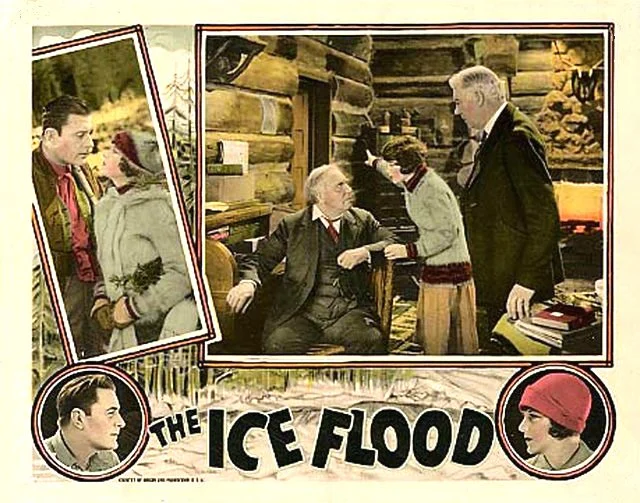
The films story
Jack De Quincy, fresh out of Oxford, is the son of a wealthy lumberjack who has been sent to been sent to straighten out the French Canadian logging camps. He tells his father that he intends to keep his identity hidden, and conceals the fact that he was a college boxing champion. The toughest camp in the area hears tales from a nearby town of a handsome "wildcat" who has kicked out it's bootleggers and ruffians. As the story progresses, romance and confrontations ensue.
Caverly-Molineaux’s Background
Karen Caverly-Molineaux’s educational journey has been a bit circuitous. But history, especially women’s history, has always been her passion.
Originally from Klamath Falls, graduated from Mazama High School and returned to school when her children were older, receiving two medical assisting degrees from IntelliTec of Grand Junction, Colo.
She did a stint at Klamath Community College, too.
“I wanted to pursue liberal arts. I was really into literature, history, even government and politics,” she said. But history was her calling.
She received her Bachelor’s in History from Eastern Oregon University working online. She also obtained a Masters in teaching from EOU. She then got her Masters in Instructional Technology from Ft. Hays State and worked as University of Alaska Southeast-Sitka’s Instructional Designer. She then achieved her Masters in history through Grand Canyon University when COVID-19 pandemic hit.
Currently, Caverly-Molineaux is finishing her PhD in history from Liberty University where she is set to defend her dissertation on Oregon women theater owners of the silent era this August.
Cover image: Karen Caverly-Molineaux created an engaging storymapping about a silent movie filmed in the Klamath Basin in the 1920s, using using a map-making software platform. (KCC photo)