Oregon Warns of Severe Wildfire Risk
Governor Tina Kotek says drought, low snowpack, and warmer conditions are raising concern ahead of the 2026 fire season.
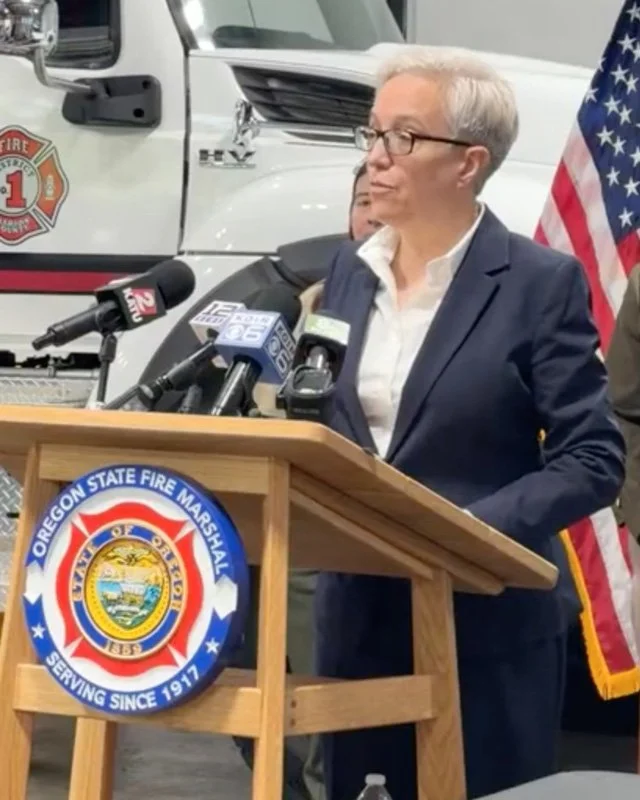
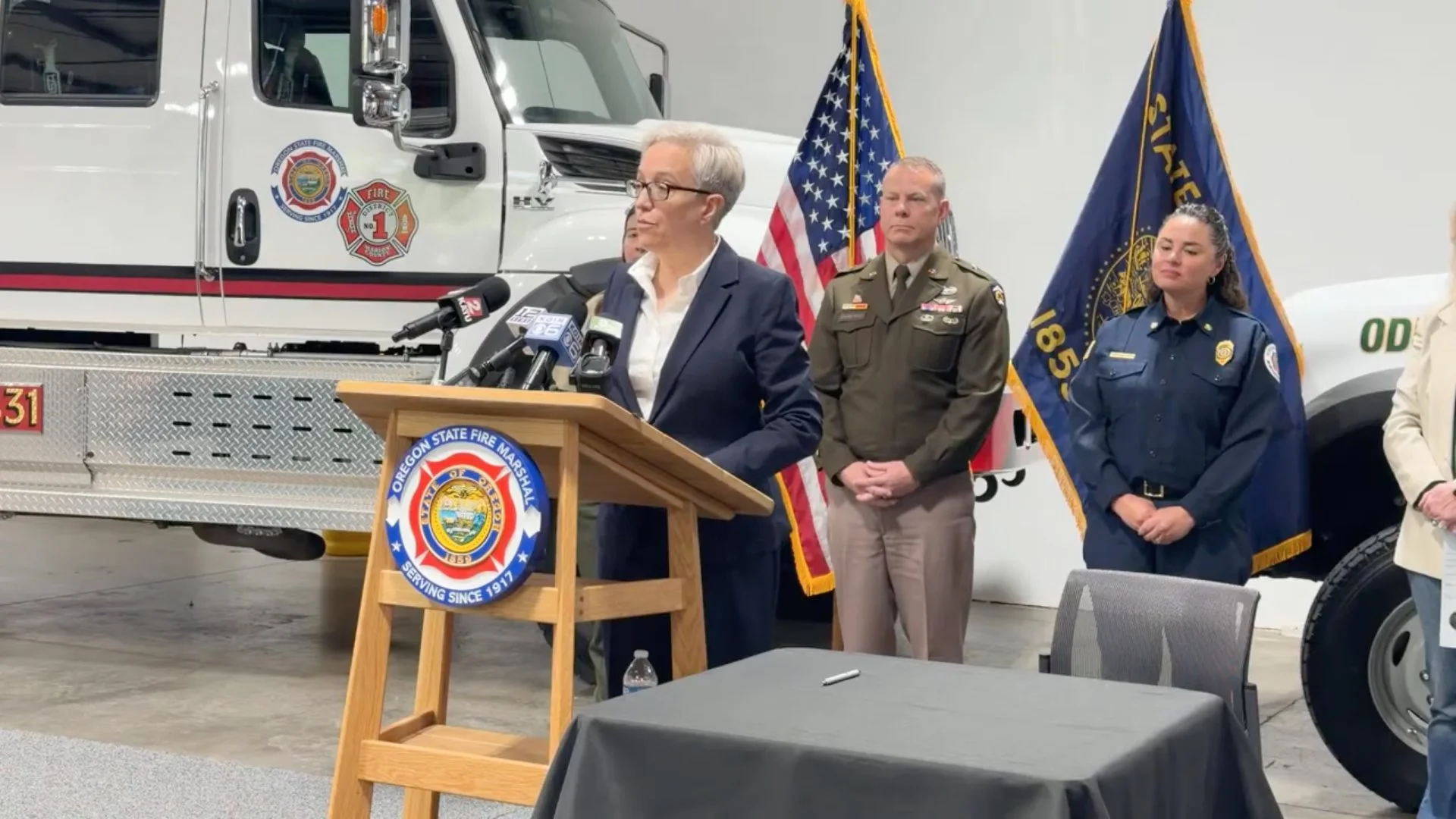
Governor Tina Kotek speaks during a 2026 wildfire season preparedness briefing at the Oregon State Fire Marshal facility. Image courtesy of the Oregon Governor’s Office.
OREGON — Governor Tina Kotek and state wildfire leaders are urging Oregonians to prepare now as the state heads toward what officials say could be a severe 2026 wildfire season.
Kotek received a statewide wildfire briefing this week from Oregon fire, forestry, emergency management, utility, air quality, military, and human services leaders. She also signed a proclamation declaring May 2026 as Wildfire Awareness Month.
Officials said severe drought, record-low snowpack, and forecasts for warmer, drier weather are creating elevated concern across the state.
“Oregon is facing severe drought conditions, with nine counties already under emergency declarations,” Governor Kotek said. “Compounding these conditions is our record-setting low snowpack, all of which lend to serious risk for a challenging wildfire season. Each fire season calls for sacrifice, courage, and cooperation from everyone involved, and in this particular moment, we are ready, we are coordinated, and we are all-hands-on-deck as we prepare for the season. Coordination across state, local, Tribal, and federal governments will be vital, and we also need every Oregonian to do their part, including preventing human-caused fires.”
State leaders urged residents to create wildfire plans, monitor local fire danger levels, follow fire restrictions, sign up for emergency alerts, and reduce fire risk around homes before conditions worsen.

The briefing was held at the Oregon Department of the State Fire Marshal, where emergency response equipment, including communication trailers and incident command vehicles, is maintained for rapid deployment under the Conflagration Act. That law allows Oregon to mobilize local fire department resources across the state to help protect communities when wildfires threaten homes and structures.
Kotek was joined by Oregon State Forester Kacey KC with the Oregon Department of Forestry, State Fire Marshal Mariana Ruiz-Temple, Oregon Department of Emergency Management Director Erin McMahon, Oregon National Guard Adjutant General Alan Gronewold, Public Utility Commission Executive Director Nolan Moser, Department of Environmental Quality Air Quality Manager Michael Orman, and Ed Flick with the Oregon Department of Human Services Office of Resiliency and Emergency.
According to state officials, the lack of snowpack and expanding drought conditions are among the largest concerns heading into summer. Officials also pointed to the potential for warmer, drier conditions and thunderstorms that may bring lightning with little rainfall, increasing the risk of new fire starts.
The National Oceanic and Atmospheric Administration is forecasting above-normal temperatures and below-average precipitation through October. State officials said significant wildland fire risk is projected to be above normal east of the Cascades beginning in June, then spreading to southwestern Oregon in July.

Officials said all indications point to a more challenging fire season ahead.
In 2025, Oregon recorded more than 2,700 wildfires across jurisdictions, which was well above the 10-year average of about 2,000. However, those fires burned approximately 330,000 acres, far below the 10-year average of more than 700,000 acres.
State leaders said prevention, early detection, and aggressive initial attack remain the foundation of Oregon’s wildfire response strategy.
The Oregon Department of Forestry is responsible for wildfire protection on 16 million acres across the state and helps manage Oregon’s coordinated wildfire protection system. ODF relies on prevention, detection, aircraft, camera systems, crews, engines, tenders, dozers, and other equipment to locate fires quickly and keep them as small as possible.
The Oregon State Fire Marshal supports statewide community and structure protection through partnerships with more than 300 local fire departments. The agency also oversees the Oregon Fire Mutual Aid System, which was mobilized to eight conflagrations last year.
State officials also emphasized the importance of defensible space. The Oregon State Fire Marshal and its partners have completed more than 6,300 defensible space assessments as part of ongoing efforts to help communities become more resilient to wildfire.
Residents are encouraged to take steps now, including spacing and pruning trees, removing leaves and pine needles near structures, cleaning roofs and gutters, moving firewood and other combustible materials away from homes, trimming plants, and keeping dead vegetation clear.
Officials also recommend avoiding planting directly under eaves and leaving at least a five-foot buffer around homes where possible.
Oregonians are also encouraged to know evacuation routes, prepare to be self-sufficient for up to two weeks, sign up for emergency alerts through OR-Alert, and monitor local smoke and air quality conditions through AirNow.
Firefighters work overnight on the Golden Fire near Bonanza, Oregon, in July 2023. Photo by Brian Gailey / HiveWire Daily archives.


Recent News